
You've got a mug ring on the side table, a stack of glasses on the dining table, and one coaster that's already warped enough to rock under a cup. That's usually when people stop treating a wood coaster set as a decorative extra and start shopping like buyers who want the thing to work in a British home.
A decent set does three jobs. It protects polished surfaces, catches drips from mugs and glassware, and adds a calm, finished look to a room without shouting for attention. The wrong set does the opposite, it stains, splits, curls at the edges, and gets shoved in a drawer after a few weeks.
Table of Contents
- Why a Wood Coaster Set Still Earns Its Place
- Understanding the Main Wood Options
- Wood Versus Cork Ceramic and Silicone
- Getting the Size Shape and Count Right
- Finishes Sealants and Food Contact Safety
- Care Cleaning and When to Replace
- Budget Value and Sustainability Trade Offs
- Your Shortlist and Shopping Checklist
Why a Wood Coaster Set Still Earns Its Place
A wood coaster set makes sense the moment you've had a proper Sunday lunch and someone sets a cold glass straight onto a lacquered table. Wood has always been about more than decoration. The Victoria and Albert Museum notes that coaster-type drinking accessories, then often called “bottle stands,” were already popular in Britain by the 1760s, used to hold decanters, slide bottles or decanters across the table, and catch drips before they marked the furniture. That history matters because it shows the coaster as a working dining object, not a trendy add-on. Victoria and Albert Museum coaster record
For modern homes, that old purpose still holds. A good set should sit under a mug, a tumbler or a wine glass and do its job without stealing the show. It should also feel sturdy enough that you don't mind leaving it out on the coffee table, because the best homeware gets used, not hidden.
Practical rule: If a coaster looks nice but can't survive routine use on a dining or side table, skip it. You're buying surface protection first and styling second.
I'd treat the set as a small but permanent part of the room, especially in open-plan homes where the living and dining areas overlap. That's why I don't care much for overly fussy shapes, gimmicky cut-outs or “statement” wood finishes that look clever in a product photo and awkward in real life. I do care about whether the edges are clean, the underside sits flat, and the surface finish looks deliberate rather than rushed.
If you're already thinking about seasonal table styling as well as everyday use, the same practical thinking applies to other small home accents, including how to make your kitchen feel Halloween ready without going ott. The point is simple, buy pieces that earn their keep.
Understanding the Main Wood Options
Wood isn't one look, and buyers who treat it that way end up disappointed. Beech, oak, walnut, acacia, mango wood and bamboo each behave differently, and in a centrally heated British home those differences show up fast in grain, colour, and how forgiving the material feels after a few months on a radiator-heavy floorplan.
How to read the wood before you buy
Oak is the dependable denim of timber. It's familiar, sturdy, and rarely looks out of place. Beech is paler and cleaner, so it suits stripped-back interiors and simple place settings. Walnut gives you a darker, richer look, which feels more premium but can show dust more readily. Acacia usually brings stronger grain movement, so it suits buyers who want texture on the table. Mango wood often sits in the warm, characterful middle ground. Bamboo reads differently again, lighter and more uniform, with a more manufactured feel even when the product is attractive.
Buyer's note: The species matters, but construction matters just as much. A good material with poor build quality still fails.
Solid wood is the safest bet if you want a coaster that feels substantial and can age with a room. Plywood can be fine if the edges are neat and the veneer is thick enough to survive regular wiping. Engineered veneer usually wins on consistency, but it can feel flatter and less durable if the top layer is too thin. Then there are the wood-look pieces, which sometimes hide resin-heavy composites that mimic timber grain without giving you the same feel or repairability.
The UK's material base is substantial enough to support all these product types. In 2024, UK woodlands supplied approximately 10.1 million green tonnes of roundwood, UK sawmills received 5.4 million green tonnes, UK production included 3.2 million cubic metres of sawnwood, and domestic apparent consumption reached 9.7 million cubic metres Forestry Research UK wood products report. That doesn't tell you which coaster to buy, but it does show why wooden household goods sit inside a real supply chain, not a novelty niche.
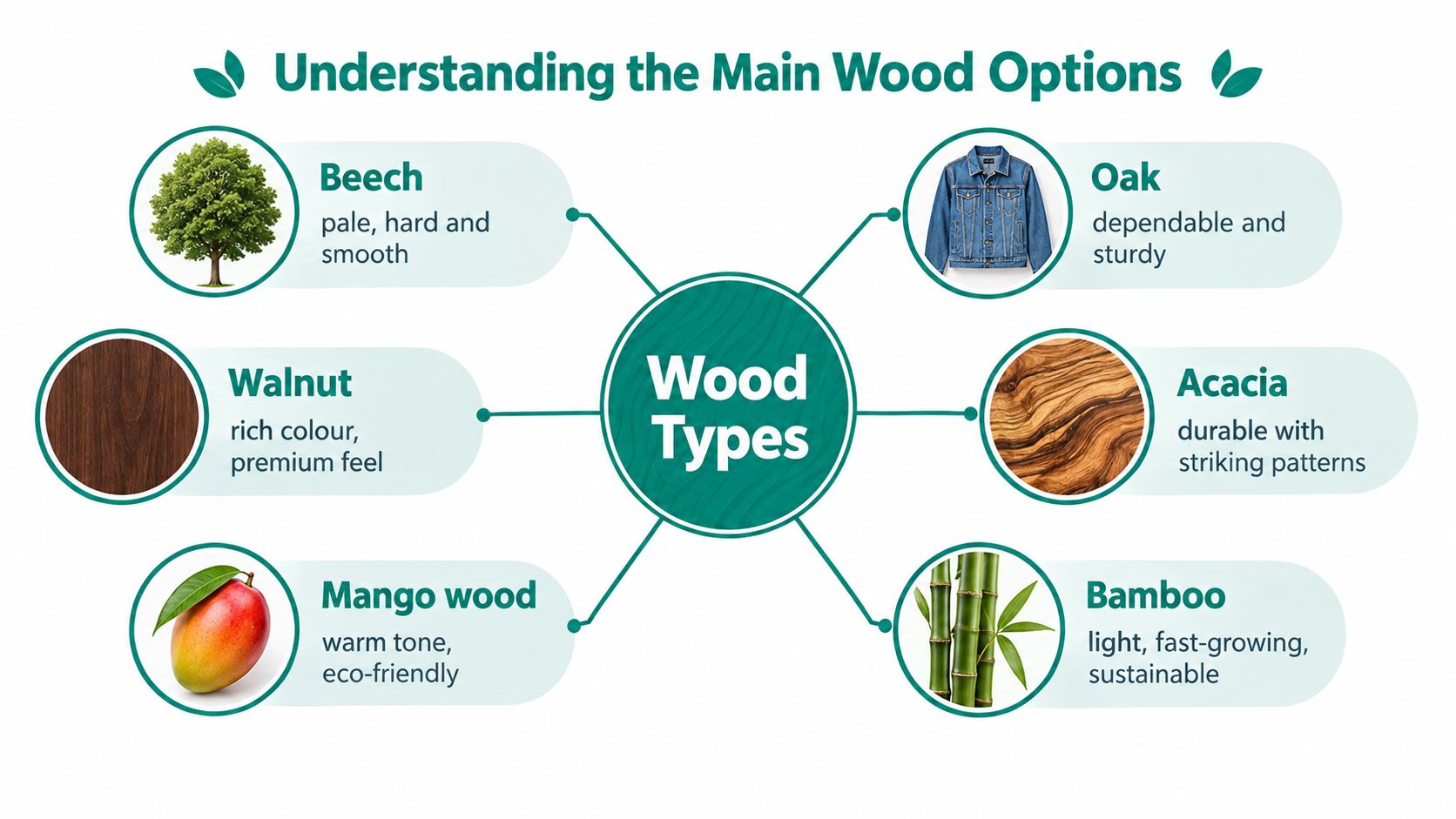
My advice is blunt. If you want the safest all-rounder, choose oak or beech. If you want richer colour and don't mind paying more attention to dust and finish, walnut makes sense. If the listing is vague and the product photos are doing all the work, assume the construction is the weak point until proven otherwise.
Wood Versus Cork Ceramic and Silicone
A lot of shopping guides praise wood and move on. That's lazy. The better question is whether wood suits your table, your mugs and your cleaning habits better than the alternatives.
| Material | Typical price | Feels under a mug | Stain resistance | Heat tolerance | Slips on glass? | Best for |
|---|---|---|---|---|---|---|
| Wood | Mid-range | Warm and firm | Moderate, depends on finish | Good if finished well | Can slip if too smooth | Living rooms, dining tables, styled homes |
| Cork | Low to mid-range | Soft and quiet | Fair, but absorbs marks | Good | Usually grips well | Casual everyday use |
| Ceramic | Mid to high | Cool and solid | Very good | Very good | Can slide if underside is bare | Hot drinks, neat surfaces |
| Silicone | Low to mid-range | Flexible and grippy | Very good | Very good | Rarely slips | Busy kitchens, family homes |
| Stone | Mid to high | Heavy and cool | Very good | Very good | Often stable, but depends on base | Formal rooms, statement settings |
Wood sits in the middle for most UK homes. It feels nicer than silicone, looks warmer than ceramic, and usually feels more finished than cork. It won't beat stone or ceramic for pure stain resistance, and it doesn't have silicone's practical grip, but it often wins when the table itself matters as much as the mug you've set down.
Cork is the easy option if you want quiet and cheap. It's forgiving, light and unobtrusive, but it can look tired quickly. Ceramic feels crisp and dependable, though it can be unforgiving on a glass table if the base isn't finished well. Silicone is the least fussy, especially in a family kitchen, but it rarely gives you the same visual polish. Stone feels proper, but it's heavier and can look a bit severe if the rest of the room is soft-furnished.
If you're buying for a front room or dining space where the coaster stays visible, wood is usually the better compromise. If you're buying for hard use, sticky hands and constant washing, silicone or ceramic is often smarter. That's the honest answer, and it's the one most shops avoid giving.
Getting the Size Shape and Count Right
A coaster that's too small looks neat until a wider mug overhangs the edge. A coaster that's too large feels clumsy and hogs table space. The sweet spot for most sets is the familiar 9 to 11 cm range, with square formats working well when you want a sharper, more contemporary look and round ones suiting softer furniture and mixed glassware.
What to match to your drinkware
An espresso cup needs less footprint than a chunky ceramic mug. A tumbler or wine glass is a different problem again, because the base may be narrow but the liquid carries more condensation risk. I'd choose a set with enough room to accommodate the widest base you use regularly, not the smallest one in the cupboard.
Thickness matters more than shoppers realise. A slim 4 mm coaster can look elegant, but it can also feel flimsy and more prone to movement. A chunkier piece up to 1.5 cm tends to feel more confident on the table and usually gives you better perceived value, though it can look heavy if the rest of the room is light and minimal.
A coaster should sit flat, stack cleanly and disappear when it's doing its job. If it wobbles, it's wrong.
Count is simple. Four works for most households that want a tidy everyday set. Six is better if you host regularly or keep drinks out with friends and family. Raised feet can help with airflow and reduce direct table contact, while recessed centres can cradle a glass more securely. Flat designs stack more neatly in a drawer, which matters if you only bring them out for guests.
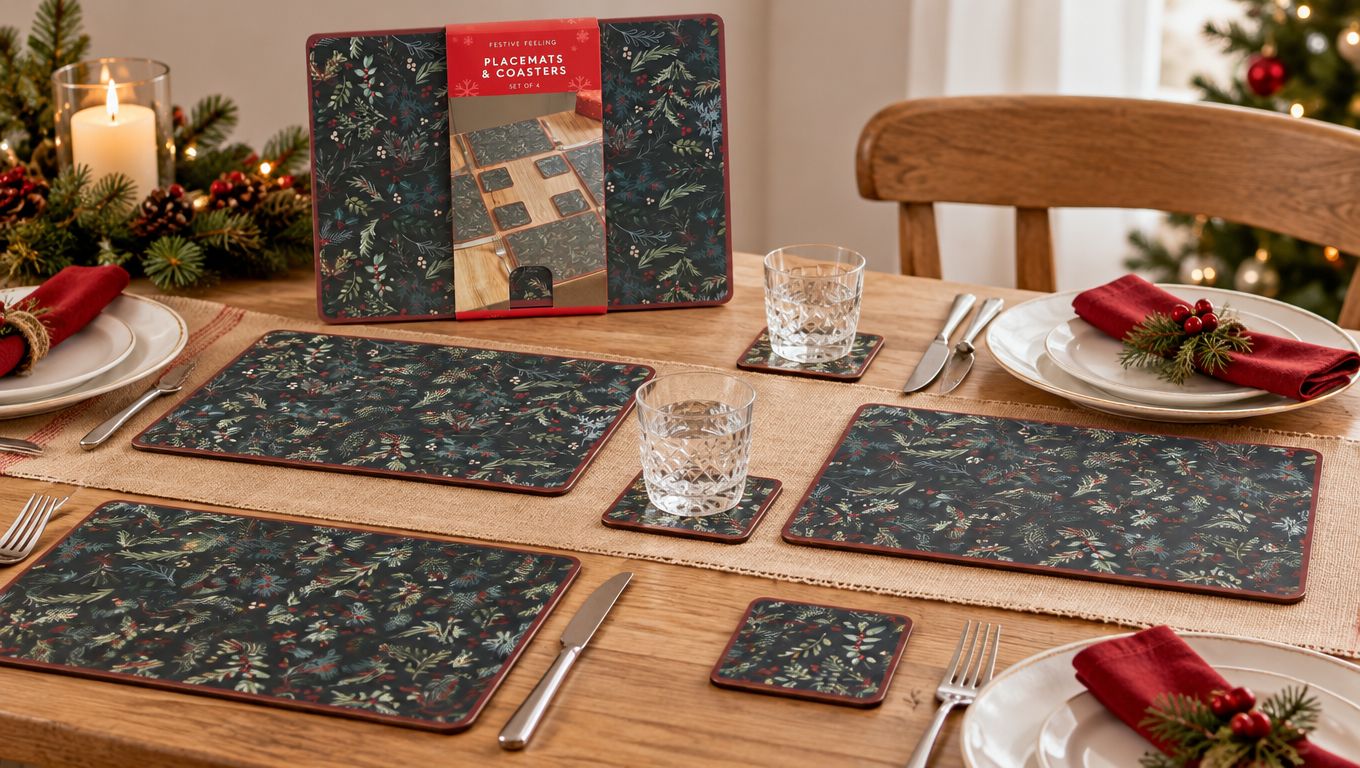
If you're browsing seasonal tableware, a product like Elevate Your Holiday Dining with Our Christmas Placemats and Coasters Set is a straightforward example of a set of four made to cover festive hosting without overcomplicating the table. I'd still check the size against your mugs and side plates before buying, because a holiday set only works if it fits the way you serve drinks.
For storage, the simple rule is this, choose the shape you'll stack and put away without thinking. Fancy silhouettes are the first thing to annoy you once the novelty wears off. If you also like decorating the table seasonally, the same practical approach applies to Christmas table cover ideas, where fit and storage matter as much as the print.
Finishes Sealants and Food Contact Safety
A coaster's finish tells you more about quality than the marketing does. A raw-looking surface can feel honest, but it can also be a maintenance headache. A well-chosen finish should control moisture, make wiping easy and protect the timber without turning it plastic-like. Mineral oil, hard wax oil, polyurethane, lacquer and shellac all change the feel in different ways, and the right one depends on whether the set is decorative or meant for regular use under cups and glasses.
What the finish is really doing
Mineral oil keeps the look natural, but it needs upkeep and won't give the hardest protection. Hard wax oil usually gives a more usable middle ground, because it keeps the grain visible while improving resistance. Polyurethane and lacquer tend to give the strongest sealed surface and the easiest wipe-down, though they can feel less organic under the hand. Shellac can look refined, but it's not the finish I'd choose for heavy moisture exposure.
UK guidance treats kitchenware and tableware as food-contact materials and requires that items placed on the Great Britain market comply with the safety framework for food-contact materials UK food-contact guidance. For a coaster that sits under cups, glasses or serving vessels, that means the wood itself, plus any stain, adhesive, ink or coating, must be suitable for the intended use and must not transfer harmful substances or alter the drink in an unacceptable way.
That's why vague terms like “food safe” are not enough on their own. I want to see a clear declaration from the supplier, plus care guidance that matches how the item will be used. If the listing says wipe clean, fine. If it suggests hand washing, also fine. If it implies dishwasher use, soaking or high heat without evidence, I'd walk away.
Strong odour, tackiness or a soft surface are warning signs. So is a finish that looks patchy around the edges, because that usually means the coating process was rushed. A coaster should feel sealed but not greasy, finished but not sticky, and practical rather than fragile.
Use test: If you wouldn't want a hot mug or condensation ring sitting on that surface every day, the finish isn't good enough.
Care Cleaning and When to Replace
A wood coaster set stays useful only if you treat it like a small piece of furniture, not disposable packaging. Wipe it down after use, don't leave water sitting on it, and keep it away from the wettest corners of the house. Thin wood movements show up quickly in a heated home, especially if a set is stored badly or pulled from a cold cupboard straight onto a warm table.
Keep the routine simple
- Wipe weekly with a damp cloth. Don't soak it. Just remove surface marks before they settle into the grain.
- Oil every few months with mineral oil if the finish calls for it. If the surface already feels sealed and hard, follow the maker's guidance instead of guessing.
- Remove water marks with gentle sanding only if the finish allows it and the damage is superficial.
- Replace when cracked or badly stained. Once the structure is compromised, it stops being a coaster and starts being a nuisance.
For indoor use, timber moisture content matters. The British Woodworking Federation says it should not exceed 13% in heated buildings and 16% in unheated buildings British Woodworking Federation timber moisture guidance. That matters because heated homes swing through very different moisture conditions over the year, and wood that starts too wet can shrink, cup or split as it dries.
Seasonal storage needs common sense. Don't leave a set on a radiator top, on a sunny windowsill or in a damp loft. Keep it flat, dry and boxed with the rest of your tableware so it's ready when the guests arrive. If you've bought a festive set for December, store it the same way you'd store decent linen, not like an impulse buy you've forgotten about.
If you're comparing wood against other materials, use the same care logic every time. A coaster that's warped, cracked or permanently stained is finished. Don't try to rescue everything just because it was cheap.
Budget Value and Sustainability Trade Offs
Wood gets called the sensible choice too quickly. Sometimes it is. Sometimes it isn't. A cheap set that wears out fast is worse value than a slightly pricier set that still looks decent next year, and that's the calculation most shoppers skip.
Think in cost per year, not just shelf price
UK household expenditure averaged £676.60 per week in FYE 2025, and the richest fifth of households spent 2.7 times as much as the poorest fifth ONS family spending data. That gap is the backdrop to buying coaster sets, because most households are juggling style, durability and budget at the same time. People want the table to look better without paying for a mistake twice.
A seasonal set in the lower price bracket can make sense if it's being used for a few weeks of Christmas hosting. A more durable everyday set makes sense when it'll live on the table year-round. The simplest test is price divided by years of use. If a cheaper set warps and gets binned quickly, the headline saving is fake.
Wood isn't automatically greener either. Extra timber means more material and often more shipping weight. An untreated surface isn't automatically better, because it may absorb moisture sooner and fail faster. Packaging matters too, but so does honest longevity. Plastic-free wrapping means little if the product itself is short-lived.
I'm sceptical of vague sustainability language unless the listing tells me something concrete about material sourcing, packaging or finish. If it doesn't, I assume the claim is decorative. That applies just as much to giftable tableware as it does to any other household buy.

Your Shortlist and Shopping Checklist
Start with the room, not the product photo. If the set is for a busy family kitchen, go for a tough finish, simple shape and enough pieces to stay useful after dinner. If it's for a front room or guest table, choose the wood species and finish that suit the furniture, then check that the underside sits flat and the edges are clean. If you're on a tight budget, buy the plainest set that still feels solid enough to last.
Shopping checklist
- Material: Choose solid wood if you want warmth and longevity, veneer if the finish is clean, and skip anything that feels vague about construction.
- Finish: Confirm whether it's sealed, wipe-clean or oil-finished, and don't assume “natural” means practical.
- Size: Check that the coaster suits your actual mugs and glasses, not just the product photos.
- Count: Four for occasional hosting, six for regular use.
- Care: Avoid sets that seem to need delicate treatment unless you're genuinely willing to maintain them.
If you want one straightforward place to look at coordinated tableware, the placement and coaster sets collection keeps the decision small and manageable. That matters more than people admit, because a good purchase is usually the one you can choose quickly and use for years.
For most UK homes, I'd buy once and buy plain. A wood coaster set should fit your table, survive heated rooms, and stay useful long after the novelty has worn off.
If you want a compact, practical place to shop for seasonal tableware and home essentials, visit N-TASH. It's the sort of range I'd point a buyer toward when they want a considered choice without endless scrolling.